
I have a dream of slowly migrating the original parts of this site – the parts you can find with the menu on the left of each page – to the more modern blog format of the newer version of Buber’s Basque Page. One of my first forays was to copy my translation of MG Ramos’s De Astronomástica Vasca, a treatise from nearly 100 years ago about the Basque names for the sun and moon. In doing a little searching on what new information there might be, I stumbled upon this cool story about how a star and its exoplanet were given names in Euskara, a first for the language.
- The International Astronomical Union has, amongst other functions, the authority to assign names to celestial bodies, including stars and planets. Founded in 1919 and headquartered in Paris, France, the IAU holds a regular contest called NameExoWorlds with the goal of naming a selection of exoplanets that have been discovered.
- An exoplanet is any planet that resides outside of our solar system. The first confirmed discovery of such a planet was in 1992, when two such planets – now called Phobetor and Poltergeist – were discovered orbiting a pulsar called Lich. As of today, nearly 6,000 exoplanets have been discovered.
- The star now known as Gar was previously designated as either Gliese 486 or Wolf 437. Residing in the constellation Virgo, it is a red dwarf star that is about 26 light years away from Earth.
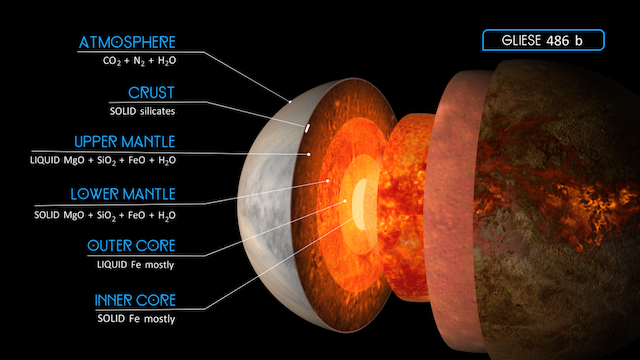
- In 2021, an exoplanet was discovered orbiting Gar by a team led by Trifon Trofonov with the Max Planck Institute for Astronomy. This planet, now named Su, has been studied using the James Webb Space Telescope which has found that the day time surface temperature is in excess of 1000 degrees Fahrenheit. This suggests Su has little to no atmosphere. It is about 3 times as massive as the Earth but is rocky.
- A team from the University of the Basque Country, led by Itziar Garate-Lopez, proposed the names Gar and Su during the 2022 NameExoWorlds contest in part because the exoplanet had been discovered from observations made in Spain, with key contributions from the Calar Alto Observatory. It’s also a fiery ball of rock, which inspired the name Su.
- In Euskara, Gar means flame and Su means fire. The Basque phrase “su ta gar” means literally “fire and flame,” but is used to indicate passion and enthusiasm. Su Ta Gar is also a heavy metal band from Eibar, Gipuzkoa.
A full list of all of Buber’s Basque Facts of the Week can be found in the Archive.
Primary sources: Dos sistemas planetarios reciben nombres en euskera y catalán, SINC
Share this / Partekatu hau:

Discover more from Buber's Basque Page
Subscribe to get the latest posts sent to your email.